
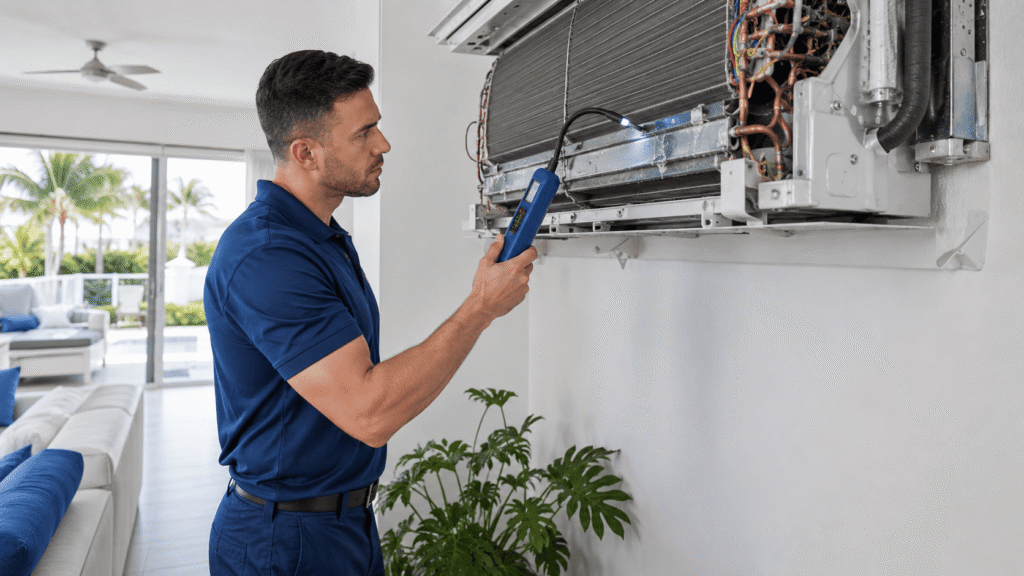
When your air conditioner starts acting up in South Florida’s relentless heat, a refrigerant leak is one of the most serious problems it could have. Unlike a dirty filter or a tripped breaker — problems you can fix yourself in minutes — a refrigerant leak requires immediate professional attention. Ignoring the signs of refrigerant leak in AC doesn’t just mean a warmer home; it means escalating damage to your system that can ultimately cost thousands of dollars to repair.
What Is Refrigerant and Why Does It Matter?
Refrigerant is the chemical compound that makes cooling possible. It circulates through your AC system, absorbing heat from the indoor air and releasing it outside. Without the correct refrigerant charge, your system cannot cool your home — no matter how long it runs or how low you set the thermostat.
Refrigerant is not consumed during normal operation. If your system is low, it means there is a leak somewhere that must be found, repaired, and recharged by a certified HVAC technician. In South Florida’s year-round heat, catching the signs of refrigerant leak in AC early is the difference between a manageable repair and a full system replacement.
7 Warning Signs of Refrigerant Leak in AC
Sign 1: Warm Air Blowing From Your Vents
The most obvious of all signs of refrigerant leak in AC systems is warm or room-temperature air coming from your vents — even when the thermostat is set low and the system is running continuously. Without enough refrigerant to absorb heat from the air, your AC simply circulates uncooled air throughout your home.
If your system is running but your home just won’t cool down no matter how long you wait, a refrigerant leak should be high on your list of suspects. Contact SFHeatandAir for a professional diagnostic before the problem worsens.
Sign 2: Ice or Frost on the Refrigerant Lines or Evaporator Coil
Finding ice on your AC system in the middle of a South Florida summer seems contradictory — but it’s one of the clearest signs of a refrigerant leak in your AC. When refrigerant levels drop, the pressure inside the evaporator coil falls too low, causing moisture in the air to freeze on the coil surface and refrigerant lines.
If you notice ice buildup on the copper lines running to your outdoor unit or inside your air handler, turn the system off immediately and call SFHeatandAir. Running a system with a frozen coil causes additional stress on the compressor — the most expensive component in your system.
Sign 3: Hissing or Bubbling Sounds Near the Unit
Unusual sounds coming from your indoor or outdoor unit are among the most telling signs of refrigerant leak in AC systems. A hissing sound typically indicates refrigerant gas escaping through a small crack or hole in the refrigerant line. A bubbling or gurgling sound usually means refrigerant is leaking in liquid form.
Neither sound is normal. If you hear either coming from your AC system, stop running it and contact SFHeatandAir right away for a professional refrigerant leak inspection.
Sign 4: Longer Cooling Cycles That Never Reach the Set Temperature
Does your AC run constantly, but your home never quite reaches the temperature you’ve set? This is one of the most commonly overlooked signs of a refrigerant leak in your AC. When refrigerant levels are low, the system has to work significantly harder and longer to try to achieve the same cooling output — and often fails to reach the target temperature entirely.
Beyond the discomfort, this constant overworking puts enormous strain on your compressor and drives your electric bill higher every month the leak goes unaddressed.
Sign 5: Higher Than Usual Electric Bills
A sudden, unexplained spike in your electricity bill is one of the signs of refrigerant leak in AC that most South Florida homeowners don’t immediately connect to their HVAC system. When refrigerant is low, your AC loses efficiency and has to run longer cycles to compensate — consuming significantly more electricity in the process.
If your electric bill has climbed noticeably without any change in usage habits, and especially if combined with any of the other signs on this list, a refrigerant leak is a likely cause. SFHeatandAir can perform a full system diagnostic to confirm whether low refrigerant is driving your energy costs up.
Sign 6: Weak Airflow Combined With Warm Air
Weak airflow from your vents paired with warm air is a particularly strong combination of signs of a refrigerant leak in your AC. While weak airflow alone can be caused by a dirty filter or blocked duct, when it’s accompanied by warm air and the system is clearly running, refrigerant loss is frequently the root cause.
Low refrigerant affects both the pressure and temperature balance inside your system, reducing overall airflow efficiency and output simultaneously. If you notice both symptoms at the same time, don’t delay — call SFHeatandAir for a same-day inspection.
Sign 7: A Sweet or Chemical Smell From the Vents
Many homeowners don’t realize that a faint sweet, chloroform-like, or slightly chemical odor coming from their vents is one of the signs of refrigerant leak in AC systems. Older refrigerants like R-22 (Freon) and even newer ones like R-410A have a distinct smell that can become noticeable when leaking in larger quantities.
Beyond the unpleasant odor, refrigerant exposure can cause headaches, dizziness, and respiratory irritation in high concentrations. If you notice any unusual chemical smell from your vents, turn your system off, ventilate the area, and contact SFHeatandAir immediately.
Why You Should Never Ignore Signs of a Refrigerant Leak in Your AC
Every day you run an AC system with a refrigerant leak, the damage compounds:
- Compressor damage: The compressor relies on refrigerant for lubrication and cooling. Running it low on refrigerant causes overheating and premature failure — a repair that can cost $1,500–$2,800 or make full replacement the only option.
- Higher energy bills: A leaking system works harder and costs more to run every single day.
- Environmental impact: Refrigerants are regulated substances with strict EPA rules around handling and disposal. A leak releases harmful chemicals into the atmosphere.
- Voided warranty: Many AC warranties require prompt professional repair of refrigerant leaks. Delaying can void your coverage entirely.
How SFHeatandAir Handles Refrigerant Leak Repair
When you call SFHeatandAir for refrigerant leak repair in South Florida, here’s what to expect:
- Full System Diagnostic — We inspect every component and use professional-grade electronic leak detectors and UV dye to pinpoint the exact location of the leak.
- Leak Repair — We seal the leak using the correct repair method based on its location and severity.
- System Evacuation — We evacuate the system to remove moisture and contaminants before recharging.
- Refrigerant Recharge — We recharge your system with the correct refrigerant type and amount specified for your unit.
- Performance Verification — We run a complete system test to confirm full cooling performance is restored.
SFHeatandAir is fully EPA-certified for refrigerant handling and serves homeowners across South Florida, including Miami, Coral Gables, Kendall, Doral, Homestead, Pembroke Pines, Fort Lauderdale, and Pompano Beach.
Final Thoughts
The signs of a refrigerant leak in your AC are rarely subtle — warm air, ice buildup, unusual sounds, chemical odors, and rising energy bills are all clear signals that something is wrong. The sooner you act on these warning signs, the less damage your system sustains and the lower your repair costs will be.
Don’t wait until your compressor fails or your electric bill doubles. If you’ve noticed any of the signs of refrigerant leak in AC described in this guide, contact SFHeatandAir today for fast, certified refrigerant leak detection and repair across South Florida.
Frequently Asked Questions (FAQs)
What are the most common signs of a refrigerant leak in AC systems?
The most common signs include warm air blowing from vents, ice forming on refrigerant lines or the evaporator coil, hissing or bubbling sounds near the unit, longer cooling cycles, higher electric bills, weak airflow, and a chemical or sweet smell from the vents.
Can I add refrigerant to my AC myself?
No. Refrigerant handling is regulated by the EPA and requires certified technicians. Adding refrigerant without finding and fixing the leak first is also ineffective — the refrigerant will simply leak out again.
How much does refrigerant leak repair cost in South Florida?
Costs typically range from $200 for minor line repairs to $1,500 or more for coil replacement or extensive leak repairs. SFHeatandAir provides upfront, transparent pricing before any work begins.
How long does refrigerant leak repair take?
Most refrigerant leak repairs are completed in a single service visit. The time required depends on the location and severity of the leak, but SFHeatandAir aims to restore full cooling performance the same day.
Can a refrigerant leak make you sick?
Yes. High concentrations of refrigerant can cause headaches, dizziness, nausea, and respiratory irritation. If you smell a chemical odor from your vents, turn off the system, ventilate the area, and contact SFHeatandAir immediately.
How do I know if my AC needs refrigerant vs. another repair?
A professional diagnostic from SFHeatandAir is the only way to confirm a refrigerant leak with certainty. Our technicians use electronic leak detectors and UV dye testing to pinpoint the exact source before recommending any repair.