Miami’s heat is relentless. With temperatures climbing into the high 90s for months at a time and humidity levels that make it feel even hotter, your air conditioning system is the hardest-working appliance in your home. The problem is that most Miami homeowners don’t notice AC problems in Miami until the system has already broken down completely — leaving them scrambling for emergency repairs during the worst possible time of year.
The good news is that most major AC failures don’t happen overnight. Your system almost always sends warning signals weeks or even months before a serious breakdown occurs. Learning to recognize the early AC repair signs in Miami can save you hundreds — sometimes thousands — of dollars in repair costs and prevent the misery of a failed AC during a Miami summer.
Why Catching AC Problems Early Matters in Miami
Miami’s climate is uniquely punishing for HVAC systems. Unlike cities where AC systems get a seasonal break, Miami’s cooling season runs virtually year-round. That constant operation accelerates wear on every component — compressors, capacitors, coils, drain lines, and electrical systems all degrade faster here than in cooler climates.
Early detection of AC problems in Miami doesn’t just save money on repairs — it extends the life of your entire system. A $150 capacitor replacement caught early prevents a $2,500 compressor failure down the road. A $100 drain line cleaning prevents water damage that costs thousands to remediate. In Miami’s environment, proactive attention to AC repair signs is always cheaper than reactive emergency service.
AC Problem Sign 1: Warm or Lukewarm Air From the Vents
If your AC is running but the air coming from your vents feels warm or only slightly cooler than room temperature, something is wrong. This is one of the most common AC problems Miami homeowners report and can point to several different underlying issues.
What it could mean:
- Low refrigerant due to a refrigerant leak
- A frozen evaporator coil restricting heat exchange
- A failing compressor that can no longer pressurize refrigerant
- Incorrect thermostat settings — set to “Fan” instead of “Cool”
What to do: Check your thermostat settings first. If those are correct and warm air persists, contact a licensed HVAC technician for a full AC unit diagnostic to pinpoint the exact cause.
AC Problem Sign 2: Unusual Sounds Coming From Your System
A properly functioning AC system should operate quietly. If you start hearing grinding, squealing, banging, rattling, clicking, or hissing from your indoor or outdoor unit, these sounds are direct AC repair signs in Miami that something has gone mechanically wrong.
What each sound means:
- Grinding — worn motor bearings in the blower or condenser fan motor
- Squealing — a slipping or worn fan belt, or a failing blower motor
- Banging or rattling — loose components inside the unit, or debris in the condenser
- Hissing — refrigerant escaping through a crack in the refrigerant line
- Clicking at startup — a failing capacitor struggling to start the compressor
Never ignore unusual sounds from your AC system. What starts as an annoying rattle can quickly progress to a complete mechanical failure. Schedule an AC unit repair before the problem escalates.
AC Problem Sign 3: Water Leaks or Pooling Around the Unit
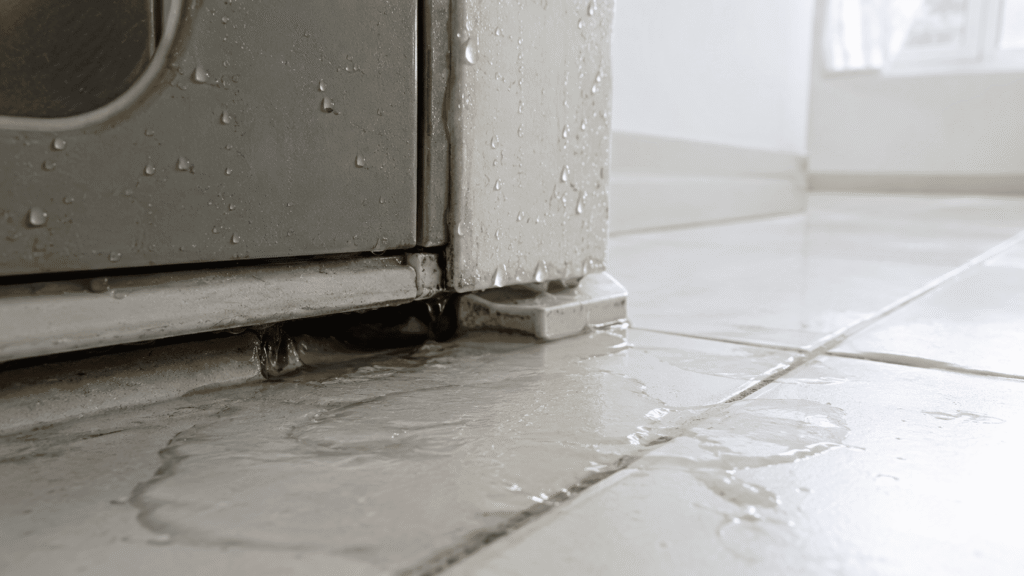
Finding water around your indoor air handler is one of the AC problems in Miami that homeowners most frequently dismiss as minor — and it rarely is. Water pooling near your unit means the condensate drain line is either clogged or the drain pan is overflowing, both of which need immediate attention.
In Miami’s humidity, a clogged drain line can develop algae and mold blockages within days during peak summer months. Most modern AC systems have a safety float switch that shuts the system off when the drain pan fills — but if that switch fails, the resulting water damage to ceilings, walls, and flooring can be extensive.
What to do: Turn your AC off and contact a technician for drain line services and a water leak repair inspection right away.
AC Problem Sign 4: Skyrocketing Energy Bills
If your electricity bill has climbed noticeably without any change in your usage habits, your AC system is likely working harder than it should — a classic sign of underlying AC problems in Miami. In Miami, where FPL bills are already significant, an inefficient AC can add $50–$200 per month to your costs without you realizing the system is struggling.
Common causes include:
- Dirty evaporator or condenser coils reducing heat transfer efficiency
- Low refrigerant making the system run longer cycles
- A failing capacitor reducing compressor efficiency
- Clogged air filters restricting airflow
- Aging equipment that has lost efficiency over time
These are all issues that a professional AC unit maintenance visit can identify and address before they drive your bills higher every month.
AC Problem Sign 5: Uneven Cooling Throughout Your Home
If some rooms in your Miami home are consistently cooler than others — or if the system runs constantly but certain areas never reach your set temperature — you have an airflow or distribution problem. Uneven cooling is one of the most common AC repair signs Miami homeowners encounter, especially in larger homes with complex duct layouts.
What it could mean:
- Duct leaks losing conditioned air into unconditioned spaces like attics
- Blocked or closed supply vents restricting airflow to specific rooms
- An undersized AC system that can’t handle the square footage
- Dirty or collapsed ductwork reducing airflow in certain zones
A professional diagnostic can pinpoint whether the issue lies with your HVAC installation, your ductwork, or your equipment — and recommend the most cost-effective fix.
AC Problem Sign 6: Ice or Frost on the Refrigerant Lines
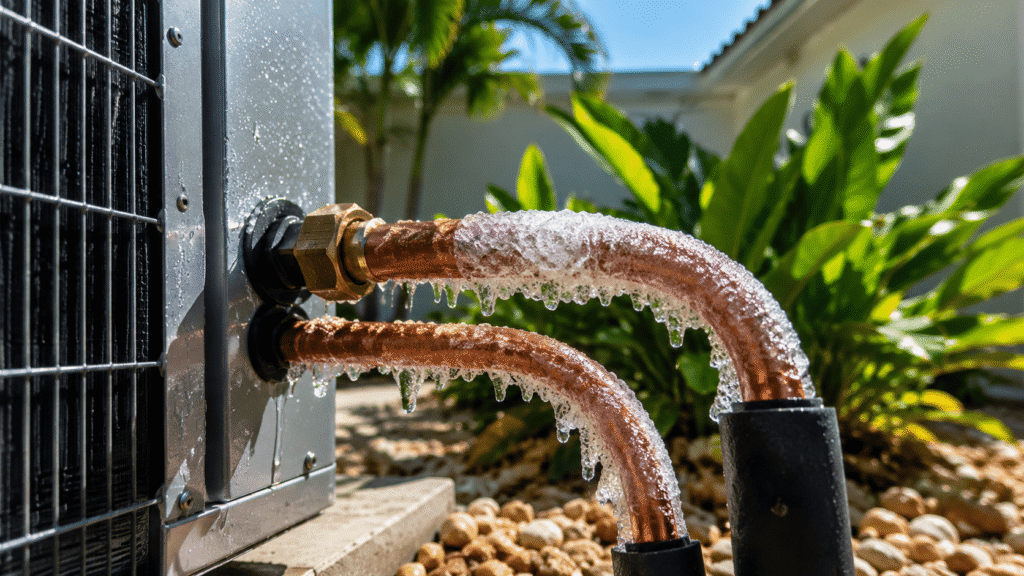
Seeing ice on your AC system in Miami feels contradictory — but it’s a serious warning sign that should never be ignored. Ice forming on the refrigerant lines or evaporator coil means your system has either restricted airflow or low refrigerant levels, both of which are critical AC problems in Miami that require immediate professional attention.
Running a system with a frozen coil puts enormous stress on the compressor — the most expensive component in your AC system. If you notice ice on your system, turn it off immediately, switch the fan to “On” to help thaw the coil, and call for a refrigerant leak repairs inspection before turning the system back on.
AC Problem Sign 7: Musty or Chemical Odors From the Vents
Unusual smells coming from your vents are direct AC repair signs in Miami that something inside your system needs attention. Different odors point to different problems:
- Musty or earthy smell — mold or mildew growing inside your air handler or ductwork, common in Miami’s humidity. Consider UV light installation to eliminate biological growth at the source.
- Burning or electrical smell — overheating wiring, a failing motor, or an electrical component burning out inside the unit
- Sweet or chemical smell — refrigerant leaking from the system, which can be harmful in high concentrations
Any persistent odor from your AC vents is a sign that professional inspection is needed. Don’t mask the smell with air fresheners — address the root cause.
AC Problem Sign 8: Frequent Cycling On and Off
An AC system that turns on and off more frequently than normal — a behavior called short cycling — is one of the most damaging AC problems Miami systems can develop. Short cycling prevents the system from completing a full cooling and dehumidification cycle, leaving your home feeling warm and clammy even when the AC appears to be running.
Common causes of short cycling:
- An oversized AC system that cools too quickly without dehumidifying
- A refrigerant leak causing pressure imbalances
- A failing thermostat sending incorrect temperature signals
- A clogged air filter starving the system of airflow
- Electrical issues with the control board or capacitor
Short cycling dramatically accelerates compressor wear. If your system is cycling more than 3 times per hour, schedule a new AC system installation consultation if the equipment is aging, or a repair visit if the system is newer.
Don’t Wait for a Breakdown — Schedule Preventive AC Maintenance
The most effective strategy against AC problems in Miami isn’t reactive repair — it’s proactive maintenance. Scheduling professional AC unit maintenance twice a year gives a licensed technician the opportunity to catch worn components, low refrigerant, dirty coils, and clogged drain lines before any of them cause an unexpected system failure.
SFHeatandAir recommends scheduling maintenance every spring before peak cooling season and every fall after the summer strain has passed. Regular maintenance keeps your system running efficiently, extends equipment life, and gives you peace of mind that your AC won’t fail on the hottest day of the year.
Final Thoughts
AC problems in Miami rarely appear without warning. Warm air, unusual sounds, water leaks, rising energy bills, uneven cooling, ice on the lines, odors from the vents, and frequent cycling are all signs your system is telling you it needs attention. The earlier you act on these AC repair signs in Miami, the less you’ll spend getting your system back to full performance.
Frequently Asked Questions (FAQs)
What are the most common AC problems in Miami?
The most common issues include warm air from vents, refrigerant leaks, frozen evaporator coils, clogged drain lines, unusual sounds, and rising energy bills. Miami’s year-round heat accelerates wear on all AC components, making these problems more frequent here than in cooler climates.
How do I know if my AC needs repair or replacement in Miami?
If your system is under 10 years old, repair is usually the right call. If it’s over 10–12 years old, uses R-22 refrigerant, or repair costs exceed 50% of replacement value, a new system installation is typically more cost-effective long-term.
Why is my AC running but not cooling my Miami home?
The most likely causes are low refrigerant, a frozen evaporator coil, a dirty air filter, or a failing compressor. Each requires a different repair approach — a professional diagnostic is the fastest way to identify the exact cause.
How often should I service my AC in Miami?
Twice a year is the minimum — once in spring and once in fall. Miami’s year-round cooling demands and high humidity make consistent maintenance more critical here than in virtually any other US city.
Can I fix AC problems in Miami myself?
Simple tasks like replacing a dirty filter, resetting a tripped breaker, or flushing the drain line with vinegar can be done yourself. Refrigerant leaks, electrical failures, frozen coils, and compressor issues require a licensed HVAC technician.
How much does AC repair cost in Miami?
Costs range from $150 for minor repairs like capacitor replacement to $1,500 or more for refrigerant leak repair or coil replacement. SFHeatandAir provides upfront, transparent pricing before any work begins — no surprise charges.