Florida homeowners deal with a long list of HVAC challenges — but few are as sneaky or as damaging as an AC drain line clog. Unlike a broken compressor or a refrigerant leak that announces itself immediately through warm air or unusual sounds, a clogged drain line often goes unnoticed for days or even weeks — until water is already seeping through your ceiling, warping your floors, or triggering a mold outbreak behind your walls.
What Is the AC Drain Line and What Does It Do?
Your air conditioning system does two things simultaneously — it cools your home, and it removes humidity from the air. As warm, humid air passes over the evaporator coil inside your air handler, moisture condenses on the cold coil surface and drips into a drain pan below. That water then flows out of your home through the condensate drain line — typically a white PVC pipe that exits through a wall, into a floor drain, or outside near your outdoor unit.
In a dry climate, this process removes a modest amount of moisture. In Florida, where relative humidity regularly exceeds 80%, your AC system can remove anywhere from 5 to 20 gallons of water per day depending on your home’s size and occupancy. That’s an enormous volume of water flowing through a small PVC pipe every single day — which is why AC drain line clogs are far more common in Florida than in almost any other state.
What Causes AC Drain Line Clogs in Florida?
Several factors contribute to AC drain line clogs in Florida — and most of them are directly related to the state’s unique climate:
1. Algae and Mold Growth
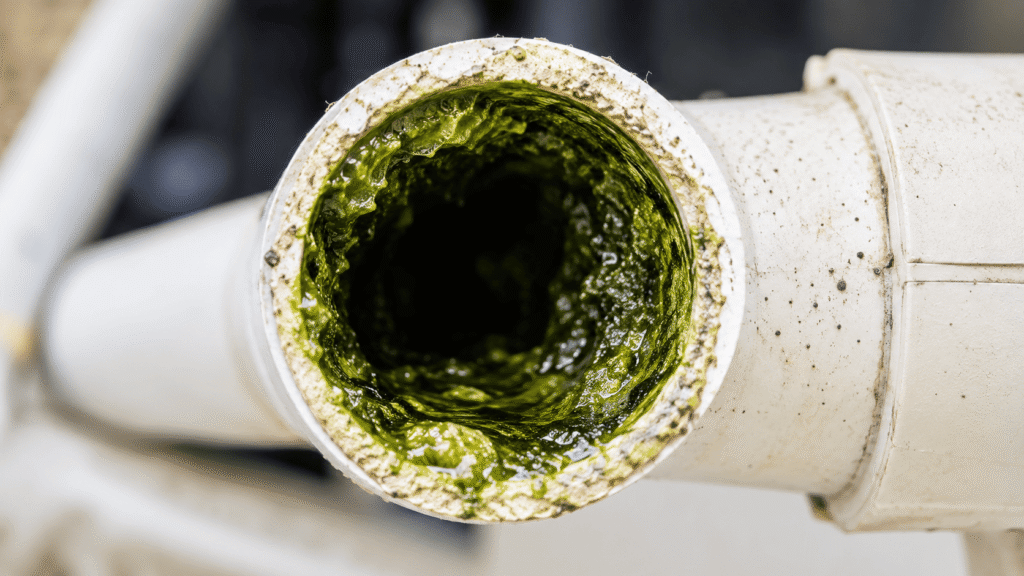
By far the most common cause of AC drain line clogs in Florida is biological growth inside the drain line. Florida’s heat and humidity create ideal conditions for algae, mold, and mildew to grow rapidly inside the moist, dark environment of your condensate drain line. Over time, this biological growth accumulates and forms a thick, slimy blockage that completely restricts water flow.
Algae growth in Florida drain lines can progress from a minor coating to a complete blockage in as little as 4–6 weeks during peak summer months — making monthly maintenance essential, not optional.
2. Dirt, Dust, and Debris Buildup
Dust and dirt particles from your home’s air get pulled into the system along with humidity. Some of these particles settle in the drain pan and wash into the drain line with the condensate water. Over time, this sediment accumulates and creates a partial blockage that restricts flow — and gives algae and mold even more material to bind to.
Dirty air filters are a significant contributor to this problem. When filters are overdue for replacement, more particulate matter bypasses the filter and enters the air handler — increasing the rate at which sediment builds up in the drain pan and drain line. Regular AC unit maintenance that includes filter replacement is one of the most effective ways to reduce sediment-related drain line clogs.
3. Drain Pan Overflow and Corrosion
In older Florida homes, the drain pan beneath the evaporator coil may be corroded, cracked, or improperly pitched — preventing water from flowing freely toward the drain line outlet. Standing water in a poorly draining pan creates a stagnant breeding ground for biological growth and accelerates the rate at which clogs develop in the connected drain line.
If your drain pan shows visible rust, cracks, or standing water after the system has been running, the pan itself may need replacement as part of your drain line services.
4. Improper Drain Line Slope
Condensate drain lines must be installed with a consistent downward slope so water flows toward the exit by gravity. In some Florida homes — particularly those with air handlers installed in tight attic spaces or closets — the drain line may have been installed without adequate slope, creating a low point where water pools rather than draining fully.
This pooled water becomes a prime location for algae and sediment to accumulate, triggering an AC drain line clog even in a relatively new system. A professional inspection can identify slope issues and correct them before they cause recurring blockages.
5. Disconnected or Damaged Drain Lines
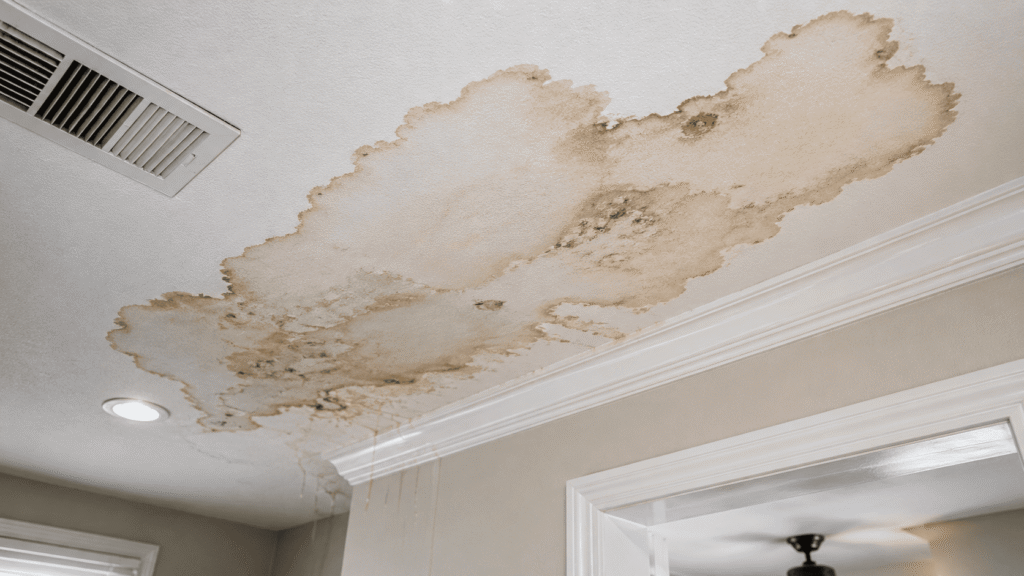
Drain lines in Florida attics are subject to expansion and contraction from extreme temperature swings. Over time, PVC connections can loosen, slip apart, or crack — causing water to leak into the attic space rather than exiting the home properly. This type of drain line failure is particularly dangerous because water may be leaking for weeks before it saturates ceiling drywall enough to become visible from below.
Warning Signs of an AC Drain Line Clog
Catching an AC drain line clog before it causes water damage requires knowing what to look for:
- Water pooling around the indoor air handler — the most obvious sign that the drain pan is overflowing
- Water stains on ceilings or walls near the air handler or along the drain line path
- AC system shutting off unexpectedly — most modern systems have a safety float switch that triggers an automatic shutdown when the drain pan fills up
- Musty or moldy smell from vents — mold growing in the drain pan or drain line can circulate through the ductwork into your living spaces
- Visible algae or slime around the drain line opening or drain pan
- Higher than normal humidity indoors — a clogged drain line reduces your system’s dehumidification capacity
If your AC is shutting off unexpectedly and you’ve ruled out other causes, an AC drain line clog is frequently the culprit. Contact Sfheatandair for a professional drain line service before the safety switch fails and water damage sets in.
How to Prevent AC Drain Line Clogs in Florida
Prevention is always more cost-effective than water damage remediation. Here are the most effective strategies Florida homeowners can use to prevent AC drain line clogs year-round:
Monthly Vinegar Flush
The simplest and most effective DIY prevention method is a monthly vinegar flush. Locate the drain line access point — the capped PVC pipe near your indoor air handler — remove the cap, and pour one cup of white distilled vinegar into the line. Let it sit for 30 minutes before flushing with clean water. The mild acidity of vinegar kills algae and mold before they can establish a full blockage.
Algae Prevention Tablets
Condensate drain pan tablets are slow-dissolving tablets placed directly in your drain pan that release algaecide into the condensate water as it drains. These tablets provide 1–3 months of continuous algae prevention between professional service visits and are available at most hardware stores in Florida.
Replace Air Filters Every 30 Days
In Florida’s environment, replacing air filters every 30 days — rather than the standard 60–90 day recommendation — significantly reduces the amount of particulate matter entering the air handler and settling in the drain pan. This simple habit reduces both sediment buildup in the drain line and the rate of biological growth.
Schedule Professional Drain Line Cleaning Twice a Year
While DIY maintenance helps between visits, professional drain line services provide a deeper clean that removes buildup from the full length of the line — not just the accessible section near the access point. Professional service also includes drain pan cleaning, float switch testing, and a full inspection of the drain line for cracks, disconnections, or slope issues.
Sfheatandair includes drain line inspection and flushing as part of every routine AC unit maintenance visit — so homeowners on our maintenance plan never have to worry about scheduling this separately.
Consider UV Light Installation
UV germicidal lamps installed inside the air handler near the evaporator coil don’t just improve indoor air quality — they dramatically reduce the rate of biological growth on the coil surface and in the drain pan. Less biological growth means less material washing into the drain line with each cooling cycle, reducing the frequency of AC drain line clogs significantly.
UV light installation is one of the most cost-effective long-term investments Florida homeowners can make to reduce recurring drain line problems.
What to Do When You Have an AC Drain Line Clog
If you suspect an active AC drain line clog, here’s what to do immediately:
- Turn off the AC system at the thermostat to stop water from continuing to flow into the drain pan
- Check the float switch — if it has tripped, the system won’t restart until the pan is cleared and the switch resets
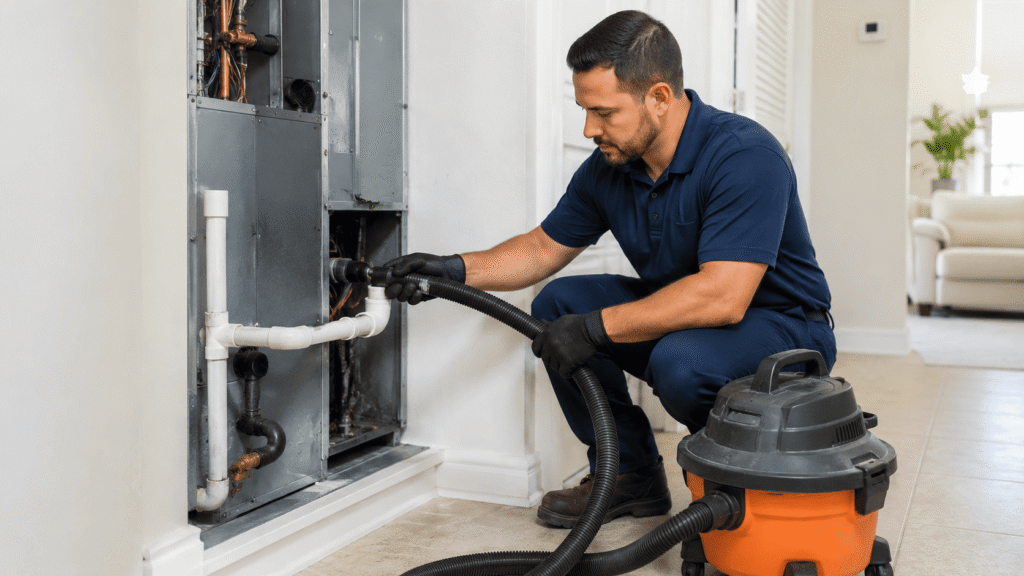
- Clear standing water from the drain pan using a wet-dry vacuum if accessible
- Attempt a DIY flush — use a wet-dry vacuum at the drain line exit point to suck out the blockage, or pour hot water and vinegar into the access point
- Call Sfheatandair if the blockage doesn’t clear or the system won’t restart after the pan is emptied
For persistent or deep blockages, a professional drain line service using a drain snake or compressed air flush is the most effective solution. If you also notice water leak damage to ceilings or walls, a professional inspection is critical to assess the extent of the damage before mold has a chance to establish itself.
Final Thoughts
An AC drain line clog in Florida isn’t a matter of if — it’s a matter of when. Florida’s heat and humidity guarantee that every condensate drain line will face biological growth and blockage challenges at some point. The difference between a $100 drain line service and a $5,000 water damage remediation project comes down entirely to how proactively you maintain your system.
Don’t wait for your ceiling to show water stains before addressing your drain line. Contact Sfheatandair today to schedule professional drain line services and keep your Florida home protected from one of the most common — and most preventable — causes of AC-related water damage.
Frequently Asked Questions (FAQs)
How often should I clean my AC drain line in Florida?
Florida homeowners should flush their drain line with white vinegar monthly and schedule a professional drain line cleaning at least twice a year. Florida's heat and humidity accelerate biological growth inside drain lines significantly faster than in cooler climates, making more frequent maintenance essential.
What happens if an AC drain line clog goes unaddressed?
An untreated AC drain line clog causes the drain pan to overflow, leading to water damage in ceilings, walls, and flooring. It can also trigger mold growth throughout the affected area and cause your AC system to shut down via the safety float switch. Repair costs for water damage and mold remediation can run into the thousands.
Can I fix an AC drain line clog myself?
Minor clogs can often be cleared using a wet-dry vacuum at the drain line exit point or a vinegar flush through the access point. However, deep or persistent blockages, disconnected drain lines, or drain pans with standing water require professional service from a licensed HVAC technician.
Why does my AC keep shutting off unexpectedly in Florida?
Unexpected AC shutoffs in Florida are frequently caused by a clogged drain line triggering the safety float switch, which automatically shuts the system off when the drain pan fills with water. Other causes include low refrigerant, a frozen evaporator coil, or electrical component failure.
How much does professional drain line service cost in South Florida?
Professional drain line cleaning in South Florida typically costs $100–$300 depending on the severity of the blockage and whether additional services like drain pan cleaning or float switch replacement are needed. Sfheatandair provides upfront pricing before any work begins.