
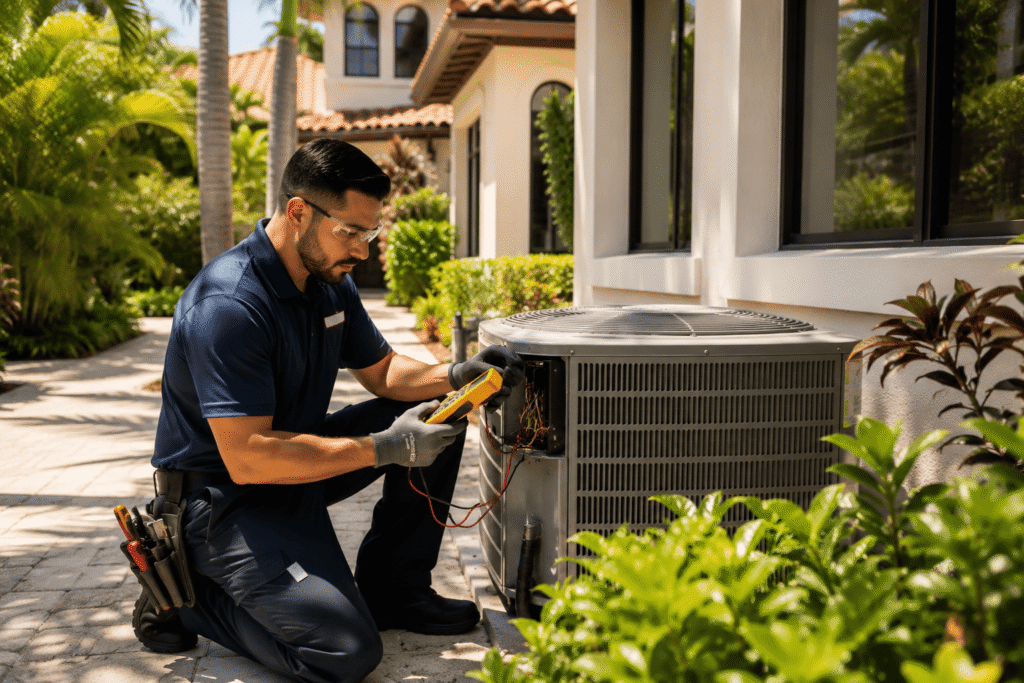
Coral Gables summers don’t leave much room for error when it comes to your air conditioning. Between the humidity rolling in off the bay and long stretches of triple-digit heat index days, a struggling AC system can turn your home uncomfortable fast. The tricky part is knowing when a small issue can wait and when it’s time to call in a professional for AC repair in Coral Gables before a minor problem becomes a costly breakdown.
This guide walks you through the warning signs your system is trying to show you, so you can catch problems early and keep your home cool without unnecessary stress.
1. Weak or Inconsistent Airflow
If you’re standing under a vent and barely feeling any air movement, that’s rarely a good sign. Weak airflow usually points to one of a few culprits: a clogged air filter, a failing blower motor, or duct issues hidden behind your walls. Sometimes it’s as simple as swapping out a dirty filter. Other times, it signals a deeper mechanical problem that only gets worse if ignored.
Inconsistent airflow — where one room feels fine and another feels like a sauna — is another red flag. It often means your ductwork has a leak, a blockage, or your system was never properly balanced for your home’s layout.
2. Warm Air Coming from the Vents
This is one of the most obvious signs something’s wrong. If your thermostat is set low but warm air is still blowing out, the issue could be a refrigerant leak, a failing compressor, or an electrical fault. None of these are DIY fixes. Refrigerant handling in particular requires certified technicians, both for safety and because of environmental regulations.
3. Strange Noises You Haven’t Heard Before
Every AC system hums along with a bit of background noise, but you’ll know when something’s off. Grinding, squealing, banging, or rattling sounds usually mean a mechanical part is loose, worn out, or on the verge of failing. Catching these noises early and scheduling AC repair in Coral Gables can often save you from a full system replacement down the road.
4. Unpleasant or Musty Odors
A musty smell often points to mold or mildew buildup inside the ductwork or the unit itself, which is a health concern as much as a mechanical one. A burning smell is more urgent and could indicate an electrical issue or an overheating motor. If you notice either, it’s worth shutting the system off and having it inspected before running it again.
5. Rising Energy Bills Without a Change in Usage
If your electricity bill has crept up and your habits haven’t changed, your AC may be working harder than it should to keep your home at temperature. This is often caused by dirty coils, low refrigerant, or an aging system losing efficiency. A tune-up can sometimes resolve this, but a noticeable spike is worth having checked out sooner rather than later.

6. Excess Humidity Indoors
Part of your AC’s job is pulling moisture out of the air. If your home feels sticky or humid even with the system running, it may not be dehumidifying properly. This can be due to an oversized unit that cools too quickly without running long enough to remove humidity, or a system that’s simply losing capacity with age.
7. Frequent Cycling On and Off
Short cycling — when your AC turns on and off more frequently than normal — puts extra wear on components and drives up energy costs. It can be caused by a thermostat malfunction, an oversized unit, or a refrigerant issue. This is a pattern best diagnosed by a professional, since the root cause can vary widely.
8. Ice Buildup on the Unit
If you spot ice forming on the outdoor unit or the refrigerant lines, turn the system off. Ice typically forms when airflow is restricted or refrigerant levels are low, and continuing to run the unit can cause serious damage to the compressor.
9. Water Leaks Around the Indoor Unit
A little condensation is normal, but pooling water or active leaks usually mean a clogged drain line or a cracked drain pan. Left unaddressed, this can lead to water damage in your home, so it’s worth having someone take a look promptly.
10. The System Is Over 10-15 Years Old
Even with good maintenance, AC systems have a lifespan. If yours is approaching or past the 10-15 year mark and you’re noticing more frequent repairs, it may be more cost-effective in the long run to talk to a professional about replacement options rather than continuing to patch an aging system.
When to Call a Professional
Some of these signs point to quick fixes, but many require the tools, training, and experience of a licensed technician. Attempting to handle refrigerant, electrical components, or complex mechanical parts on your own can be dangerous and may void your system’s warranty. If you’re noticing any combination of the signs above, it’s a good time to schedule AC repair in Coral Gables rather than waiting for a full breakdown during the hottest part of the year.
At Sfheatandair, we’ve helped Coral Gables homeowners diagnose and resolve these exact issues, from minor tune-ups to full system repairs. Our technicians are trained to spot the underlying cause quickly, so you’re not paying for guesswork.
Final Thoughts
Your AC gives you warning signs long before it fails completely — the key is knowing what to look and listen for. Weak airflow, strange noises, rising bills, and unusual odors are all worth taking seriously. Catching these issues early not only keeps your home comfortable but can also extend the life of your system and save you money on repairs down the road.
Frequently Asked Questions
How do I know if my AC problem is minor or serious?
Minor issues like a dirty filter or low airflow can sometimes be fixed at home, but signs like warm air, ice buildup, strange odors, or water leaks usually point to something more serious that needs professional attention.
How often should I schedule AC maintenance in Coral Gables?
Given the region's heat and humidity, most systems benefit from a professional check-up at least once a year, ideally before the peak summer season begins.
Why is my AC running but not cooling the house?
This is often caused by low refrigerant, a failing compressor, dirty coils, or blocked airflow. A technician can pinpoint the exact cause with a diagnostic inspection.
Can I fix a refrigerant leak myself?
No. Refrigerant handling requires certification and specialized equipment. Attempting this yourself can be unsafe and is regulated by environmental laws.
How long does a typical AC repair take?
Most repairs can be completed within a few hours, though the timeline depends on the issue's complexity and whether replacement parts need to be ordered.
What's the average cost of AC repair in Coral Gables?
Costs vary depending on the issue, from simple fixes to more involved compressor or refrigerant work. Requesting a diagnostic visit is the best way to get an accurate estimate for your situation.
How can I prevent AC problems in the future?
Regular filter changes, annual professional maintenance, and addressing small issues quickly can go a long way toward preventing major breakdowns.