
If you’re replacing your cooling system or installing AC in a new addition, renovation, or home office, one question comes up more than any other: central AC vs mini split — which one is actually better for South Florida homes? It’s not a simple answer, and choosing the wrong system for your specific situation can mean years of discomfort, higher energy bills, and premature equipment failure in Miami-Dade’s relentless heat and humidity.
What Is a Central AC System?
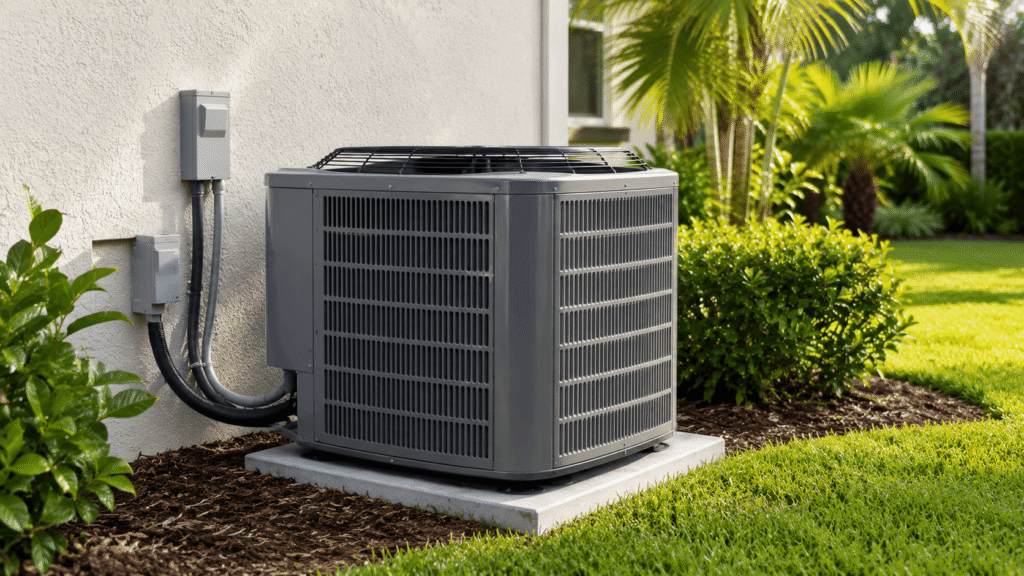
A central AC system uses a network of ducts and vents to distribute cooled air throughout your entire home from a single outdoor condenser unit and indoor air handler. The system conditions all connected rooms simultaneously, controlled by one central thermostat or a zoned control panel.
Central AC is the most common cooling system in South Florida homes — particularly in properties built before 2000 — and is generally the default choice for whole-home cooling in new construction. It’s familiar, widely serviced, and integrates seamlessly with existing ductwork and home infrastructure.
What Is a Mini Split System?
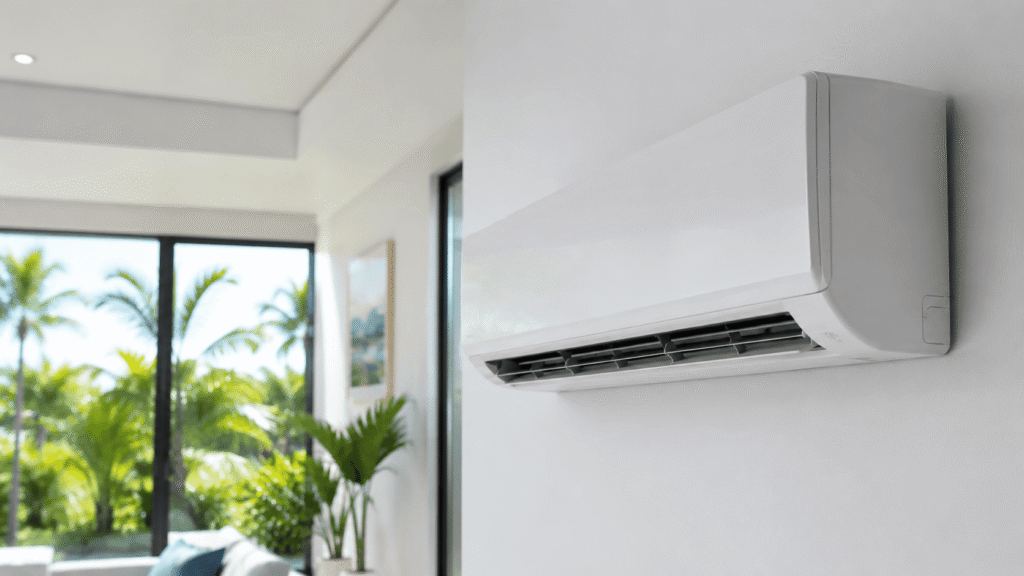
A mini split — also called a ductless mini split or ductless AC — consists of a small outdoor compressor unit connected to one or more indoor air-handling units mounted on walls or ceilings. Each indoor unit cools a specific zone independently, without the need for ductwork.
Mini splits have surged in popularity across South Florida in recent years, particularly for room additions, converted garages, new construction with open floor plans, and homes where extending existing ductwork isn’t practical or cost-effective.
Central AC vs Mini Split: The Key Differences
Installation and Ductwork
Central AC requires a complete duct system throughout the home. If your South Florida home already has existing ductwork in good condition, central AC installation is straightforward. If ductwork needs to be installed from scratch or extensively repaired, costs rise significantly — and poorly installed or leaking ducts in South Florida’s attic heat can reduce system efficiency by 20–30%.
Mini splits require no ductwork — installation involves only a small hole through the wall for the refrigerant lines and electrical connections. This makes mini split installation dramatically faster and less invasive, particularly in older Miami homes or concrete block construction where running new ductwork is difficult and expensive.
Verdict: Mini split wins for homes without existing ductwork or room additions. Central AC wins for whole-home replacement where ductwork is already in place.
Energy Efficiency in South Florida’s Climate
Energy efficiency is one of the most important factors in the central AC vs mini split debate for South Florida homeowners — where cooling costs dominate annual energy budgets.
Mini splits are generally more energy-efficient than central systems because they eliminate duct losses entirely. In South Florida, where attic temperatures regularly exceed 140°F, ducts running through unconditioned spaces can lose 25–30% of their cooling capacity before the air reaches living areas. Mini splits deliver conditioned air directly to the room with no duct losses — giving them a measurable efficiency advantage.
Modern mini splits typically carry SEER ratings between 18 and 30+, compared to standard central AC systems that average 16–18 SEER. Over years of South Florida’s near-constant operation, that efficiency difference translates into meaningful savings on monthly FPL bills.
Verdict: Mini splits are typically more energy-efficient, especially in homes with poorly insulated attic ductwork.
Upfront Cost vs Long-Term Value
Central AC systems have a lower upfront cost per ton of cooling capacity when replacing an existing system with existing ductwork. A full central AC replacement in South Florida typically runs $4,000–$9,000 depending on system size, brand, and efficiency rating.
Mini splits cost more per ton upfront — a single-zone mini split system typically runs $2,500–$5,000 installed, while a whole-home multi-zone mini split system covering 4–5 zones can cost $10,000–$20,000 or more. However, the long-term energy savings and elimination of duct maintenance costs often make multi-zone mini splits competitive over a 10–15 year system lifespan.
For cooling a single room, addition, or zone, a mini split is almost always more cost-effective than extending existing ductwork or installing a new central system.
Verdict: Central AC wins on upfront cost for whole-home replacement. Mini splits win for single-room or additional cooling and offer better long-term value in high-efficiency installations.
Zoning and Temperature Control
One of the biggest advantages mini splits hold in the central AC vs mini split comparison is precise, independent zone control. Each indoor unit in a mini split system has its own thermostat — meaning different family members can set different temperatures in different rooms simultaneously, without affecting each other.
Central AC with a single thermostat cools the entire home to one temperature — which means overcooling some areas to satisfy others. While zoned central AC systems exist, they add significant cost and complexity compared to the built-in zoning of a multi-zone mini split.
In South Florida homes where usage patterns vary significantly room-to-room — home offices used all day, guest rooms used rarely — mini split zoning can deliver meaningful comfort improvements and energy savings by only conditioning spaces that are actually occupied.
Verdict: Mini splits offer superior zoning flexibility with no additional cost.
Aesthetics and Indoor Footprint
Central AC is virtually invisible inside the home — all components are concealed in the ductwork, air handler closet, and ceiling vents. This is a significant advantage for homeowners who prioritize interior aesthetics.
Mini splits require wall-mounted or ceiling cassette indoor units that are visible in each room. While modern mini split units are sleek and relatively unobtrusive, they are a visible presence in the room — which some homeowners prefer to avoid, particularly in formal living spaces or rooms with specific design themes.
Verdict: Central AC wins on aesthetics for homeowners who prefer invisible systems.
Maintenance Requirements in South Florida
Both systems require regular maintenance in South Florida’s demanding climate — but the specifics differ.
Central AC maintenance includes coil cleaning, duct inspection, drain line flushing, filter replacement, and refrigerant checks. AC unit maintenance should be scheduled twice a year to keep central systems performing efficiently in South Florida’s heat.
Mini split maintenance is simpler in some respects — there are no ducts to inspect or seal — but each indoor unit has its own filters that need cleaning monthly, and coils on each indoor head require periodic cleaning to prevent mold growth in South Florida’s humidity. UV light installation is highly recommended for mini split indoor units in South Florida to prevent biological growth on the evaporator coils.
Verdict: Both systems require consistent maintenance. Mini splits require attention to each individual indoor unit; central systems require duct system maintenance in addition to equipment care.
Which System Is Right for Your South Florida Home?
Here’s a practical decision guide for South Florida homeowners:
Choose Central AC if:
- Your home already has existing ductwork in good condition
- You want whole-home cooling at the lowest upfront cost
- You prefer a fully concealed system with no visible indoor units
- You’re replacing an existing central system like-for-like
Choose a Mini Split if:
- You’re adding a room, converting a garage, or building an addition
- Your home doesn’t have existing ductwork
- You want independent temperature control in multiple zones
- You prioritize maximum energy efficiency and lower long-term operating costs
- Your existing ductwork is in poor condition and would need extensive replacement
Final Thoughts
The central AC vs mini split debate doesn’t have a universal winner — it comes down to your home’s specific layout, existing infrastructure, budget, and cooling priorities. For many South Florida homeowners, the best solution is actually a combination of both: central AC for the main living areas and a mini split for a specific room or addition that the central system can’t reach efficiently.
SFHeatandAir helps South Florida homeowners evaluate both options with honest, unbiased guidance — and installs, maintains, and repairs both central AC and mini split systems across Miami, Coral Gables, Kendall, Doral, Homestead, Pembroke Pines, Fort Lauderdale, and Pompano Beach. Contact SFHeatandAir today to schedule a consultation and find the right cooling solution for your home.
Frequently Asked Questions (FAQs)
Is a mini split better than central AC for South Florida?
It depends on your situation. Mini splits offer better energy efficiency and zoning flexibility, while central AC is more cost-effective for whole-home replacement when ductwork already exists. Sfheatandair can assess your home and recommend the best option.
How long do mini splits last in South Florida’s climate?
With proper maintenance, mini split systems typically last 15–20 years in South Florida. Regular coil cleaning and filter maintenance are essential to prevent mold growth in the humid climate.
Can a mini split cool an entire South Florida home?
Yes — a multi-zone mini split system with multiple indoor units can cool an entire home. However, the upfront cost for whole-home mini split coverage is typically higher than a central AC replacement where ductwork already exists.
What SEER rating should I look for in South Florida?
For South Florida’s climate, look for a minimum SEER rating of 16 for central AC and 18+ for mini splits. Higher SEER ratings deliver meaningful savings in a climate where cooling runs nearly year-round.
How much does mini split installation cost in South Florida?
Single-zone mini split installation typically runs $2,500–$5,000. Multi-zone whole-home systems range from $10,000–$20,000 depending on the number of zones and system capacity.